
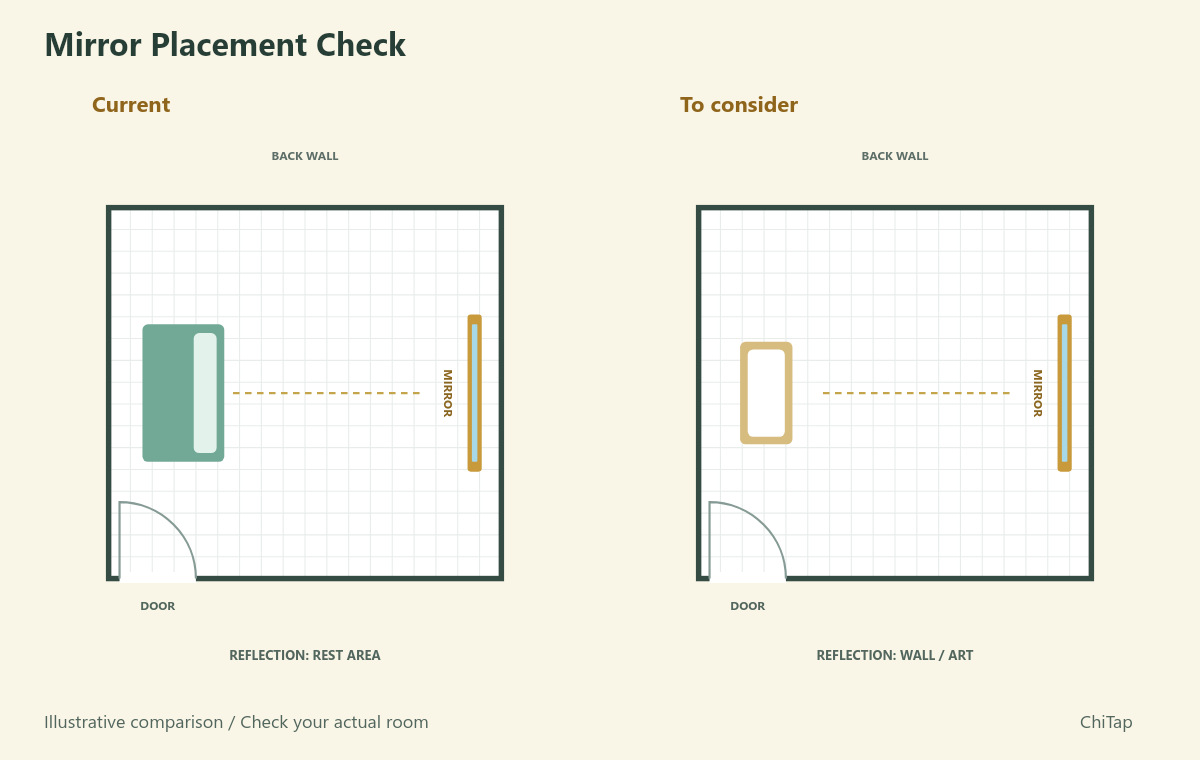
Look from where you actually rest
A mirror can show a doorway, a bright window or movement outside your main field of view. Check the reflection from your normal resting position, not only while standing beside it. Notice whether it bothers you. Someone else's preferred arrangement does not establish how comfortable the same reflection will feel in your room.
Test a small change first
When a reflection is distracting, try a temporary cover or a different angle before committing to new mounting holes. If neither changes the discomfort, a new mirror position may not be the useful next step. Do not interpret a room experiment as a medical assessment or a guarantee of better sleep.
Give light and mounting priority
Direct sun can produce glare. Check how the reflected light changes during the day and keep mounting suitable for the mirror's weight, wall type and fixing instructions. Do not lean or remount a heavy mirror without appropriate supports. This website cannot assess the wall, fixings or safety of an installation.
Keep the cultural context clear
Avoiding a mirror opposite a bed is a traditional bedroom preference discussed by feng shui practitioners. It may be a meaningful choice for you, but it should not be turned into a frightening claim about relationships, health or fortune. A reflection you enjoy does not become harmful because a diagram says it is facing the bed.
Use the check as a conversation with your room
The Mirror Placement Check asks what you see, whether the reflection distracts you, whether direct sun reaches it and whether mounting is secure. Its alternative reflection is illustrative: verify the actual angle in your room. It cannot trace rays of light or guarantee that a proposed wall will reflect a particular object.