
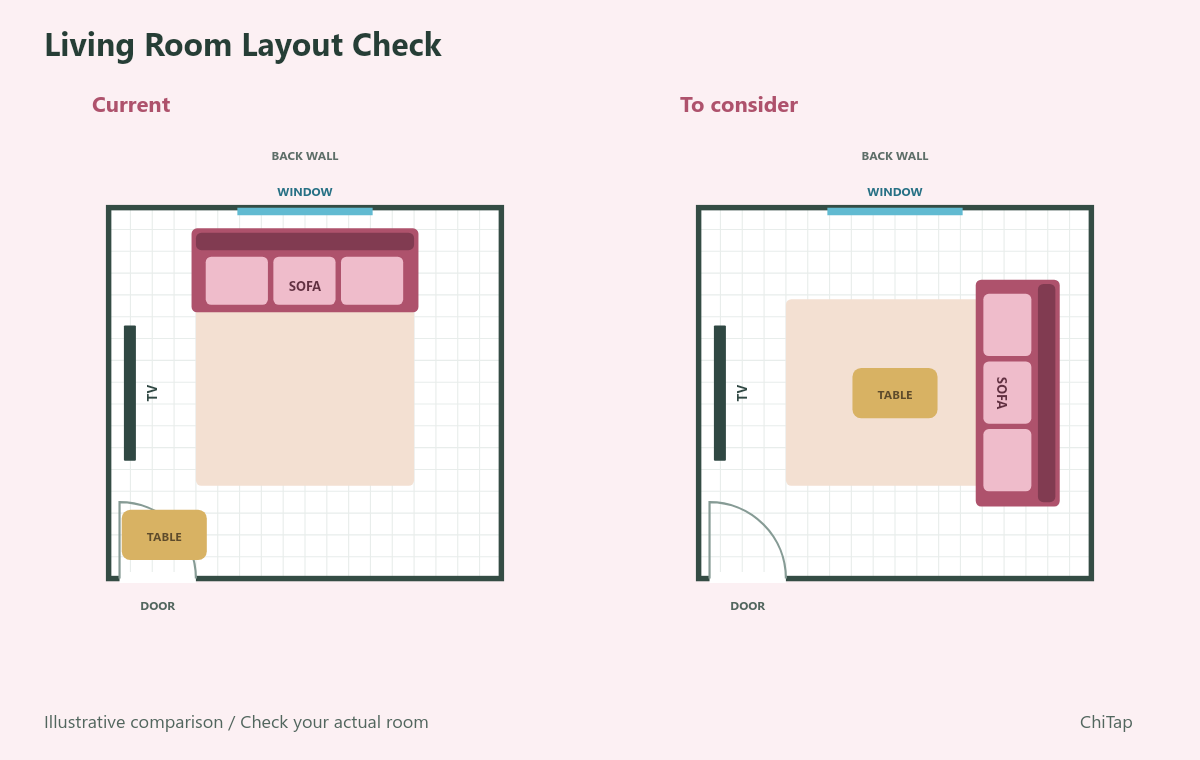
Check the parts you still need to reach
Sit down, stand up, open the curtains and reach the window handle. Check whether the back of the sofa obstructs ventilation or hides a heater. Follow the heating equipment manufacturer's required clearances. Do not use a general furniture diagram as a substitute for those instructions. A low sofa may leave a view open, but that alone does not establish a safe installation.
Keep an actual route out
If the window is part of an escape route, keep it accessible and follow local requirements. Start with a clear route from the doorway to the seating, too. A coffee table that looks centered on a plan can still make the entrance awkward in a small room. US Fire Administration guidance recommends knowing and keeping routes out available.
Compare the view from the seat
A television on the wall opposite the sofa gives a more direct sightline than a screen to one side. This does not mean every room needs a television or every sofa must face one. Try the seat you actually use and check daylight reflections at your usual viewing time. The tool does not estimate viewing distance or screen glare.
Treat a supported seat as a preference
Traditional feng shui often favors a solid support behind the main seat. You can consider that alongside your real constraints, rather than treating a window as a problem to fear. An arrangement that leaves a cramped entrance or unusable window is not improved just because the sofa touches a solid wall.
Compare before you lift
The Living Room Layout Check holds your window and television on the walls you choose, then compares three sofa-wall templates and table access. Its diagram is not to scale. Check actual furniture dimensions, curtains, heater clearances and door movement in the room before trying the suggestion.